

Childhood Sexual Abuse Therapy: How EMDR, Somatic & Relational Trauma Therapy Can Support Healing

Sometimes the confusing part about surviving childhood sexual abuse is that you can understand, intellectually, that what happened is over — while some part of you still reacts as though it isn’t.
You may know you are safe and still tense when someone gets too close. You may deeply want intimacy but feel yourself disconnect once it arrives. You might freeze during conflict, struggle to identify what you want, feel uncomfortable inside your own body, or suddenly become hyperaware of another person’s mood.
None of these reactions mean that every survivor will develop PTSD or struggle in the same way. The effects of childhood sexual abuse are incredibly individual. But research has consistently linked childhood sexual abuse with increased risk for trauma symptoms, dissociation, shame, interpersonal difficulties, and challenges with sexual and relational functioning later in life (Dworkin et al., 2024; Vonderlin et al., 2018; Whiffen & MacIntosh, 2005).
This is one reason childhood sexual abuse therapy often needs to go beyond simply talking about what happened. Healing may involve the mind, the body, the nervous system, relationships — and, importantly, your sense of choice.
How Childhood Sexual Abuse Can Affect the Nervous System and Body

When a child experiences sexual abuse, the harm is not only that something frightening or violating happened. It can also disrupt fundamental experiences of safety, agency, bodily autonomy, trust, and connection.
The nervous system learns from experience. If closeness, touch, authority, secrecy, or vulnerability became associated with danger, the body may continue to respond quickly to similar cues later — even when the present situation is different.
That can sometimes look like:
becoming intensely alert to another person's body language or tone
freezing or going blank during conflict or intimacy
feeling detached from physical sensations
difficulty recognizing hunger, fatigue, desire, discomfort, or boundaries
chronic muscular tension or difficulty settling
avoiding touch or, alternatively, struggling to know when you actually want it
feeling shame about your body or sexuality
knowing cognitively that you are safe while your body reacts otherwise
A meta-analysis examining childhood maltreatment found significantly greater dissociative symptoms among people with abuse histories, with particularly elevated scores following sexual and physical abuse (Vonderlin et al., 2018). More recent research has also found associations between childhood sexual abuse and aspects of adult sexual distress and sexual functioning, although survivors’ experiences vary considerably (Aşci et al., 2024).
The important distinction is this: your reactions may have been adaptations before they became problems.
Disconnecting, freezing, scanning the environment, staying quiet, or becoming extremely sensitive to another person's emotional state may once have helped you survive something you had little control over.
Trauma therapy is not about shaming those adaptations out of you. It is about helping your system learn that it now has more choices.
What Does Trauma Therapy for Childhood Sexual Abuse Actually Look Like?
There is no single therapy that every survivor “should” receive.
Research on adults who experienced childhood sexual abuse suggests that psychotherapy can reduce trauma-related symptoms and psychological distress, but it has not established one universally superior approach for every survivor (Martsolf & Draucker, 2005; Sousa-Gomes et al., 2024).
Good trauma therapy also should not mean walking into your first appointment and immediately recounting the most painful experiences of your life.
A recent systematic review of sexual-abuse survivors' experiences in therapy found that choice, autonomy, control over when and what to disclose, and feeling genuinely connected to the therapist were central to helpful treatment (Parry & Simpson, 2016; systematic review updated in 2025).
At Boundless, that is why we think of trauma treatment as more than “processing the memory.”
It can also mean learning:
Can I notice what I feel without immediately escaping it?
Can I know when something feels like a yes, a no, or an I'm-not-sure-yet?
Can another person be close to me without me losing myself?
Can I have control over what happens next? Those questions matter too.
EMDR Therapy for Childhood Trauma and Sexual Abuse
EMDR — Eye Movement Desensitization and Reprocessing — is a structured trauma therapy that asks clients to briefly attend to distressing memories while engaging in bilateral stimulation, such as guided eye movements.
Rather than requiring prolonged detailed retelling of the traumatic event, EMDR aims to help distressing memories become less emotionally and physiologically overwhelming when recalled. The American Psychological Association includes EMDR among treatments suggested for adults with PTSD, and multiple major clinical practice guidelines recognize it as an evidence-supported PTSD treatment. (American Psychological Association, 2025).
For a survivor of childhood sexual abuse, EMDR therapy might eventually address a specific memory — but treatment can also focus on beliefs and reactions that continue into the present:
“I have no control.”
“My body isn't mine.”
“I should have stopped it.”
“I can't trust anyone.”
“Something bad will happen if I say no.”
Importantly, EMDR is not simply “start the eye movements and process the trauma.” History-taking, preparation, resourcing, assessment, reprocessing, and integration are all parts of the structured EMDR model.
Where Somatic Therapy Fits Into Trauma Healing
Some survivors can tell the story of what happened remarkably clearly — and still feel overwhelmed by their body's response.
This is where somatic and body-oriented trauma therapy can offer another doorway into healing.
Somatic work may help someone begin noticing physical sensations without immediately becoming overwhelmed by them: tightening in the chest, numbness, warmth, the urge to pull away, shallow breathing, heaviness, or the feeling of taking up space.
This does not mean every physical sensation is a hidden trauma memory.
It means that therapy can help you become more curious about what your body is communicating instead of experiencing the body solely as something unpredictable, unsafe, or disconnected from you.
Research into body- and movement-oriented interventions for PTSD is promising but still developing. A 2023 systematic review and meta-analysis found reductions in PTSD symptoms across body- and movement-oriented interventions, while also finding considerable variation between studies — an important reason not to present somatic therapy as a universal cure (van de Kamp & colleagues, 2023).

Relational Trauma Therapy: Healing What Happened Between People, Between People
Sexual abuse is also an interpersonal trauma.
When harm happens within a relationship — particularly one involving trust, caregiving, dependence, or power — relationships themselves can become complicated afterward.
A large 2026 meta-analysis found an association between childhood sexual abuse and adult attachment difficulties, including attachment anxiety and avoidance. That does not mean survivors are destined to have unhealthy relationships. It does help explain why healing may involve more than reducing flashbacks or anxiety symptoms.
Relational trauma therapy pays attention to what happens between therapist and client, too.
Can you disagree with your therapist?
Can you say something feels too fast?
Can you change your mind?
Can you notice that another person is disappointed without automatically taking responsibility for their emotions?
Can your boundaries exist without threatening the relationship?
A safe therapeutic relationship can become one place to practice connection without surrendering autonomy.
Group Therapy for Adult Survivors of Childhood Sexual Abuse
There is another experience many survivors quietly carry: “I am the only person who feels like this.”
Group therapy can challenge that isolation.
For some survivors, being in a carefully facilitated space with other people who understand parts of the experience can reduce shame and create opportunities for connection, witnessing, nervous-system regulation, and practicing boundaries in real time.
That does not mean group therapy requires sitting in a circle and recounting graphic details of abuse.
Research supports psychotherapy for adult survivors of childhood sexual abuse across individual and group formats, while also showing that we still need stronger evidence to determine exactly which format is most effective for whom (Martsolf & Draucker, 2005).
At Boundless, our trauma-informed group for adult survivors of childhood sexual abuse is intentionally grounded in safety and stabilization. The work incorporates grounding, nervous-system regulation, skill-building, body connection, and supported processing rather than forcing disclosure before someone feels ready. Our current model is an eight-week, virtual, all-gender group led by Dipti Balwani, LMHC, RYT-200.
Childhood Sexual Abuse, Culture, and Silence
For some survivors, trauma exists alongside another layer: what their family or culture taught them they were allowed to say.
In communities where sex is rarely discussed openly, preserving family reputation is heavily emphasized, or challenging elders carries significant consequences, survivors may have had very little language for what happened — let alone permission to disclose it.
A 2024 systematic review focusing specifically on adult survivors of childhood sexual abuse in South Asia highlighted both significant psychological and social impacts and the need for more culturally specific research and treatment approaches (Talwar et al., 2024).
Culturally responsive trauma therapy does not require rejecting your culture or your family.
It creates space to ask harder questions without deciding the answers for you:
What protected me?
What silenced me?
What do I want to keep?
What am I allowed to change?
Finding Trauma Therapy in New York, Massachusetts Pennsylvania, New Jersey, California & Florida
Healing from childhood sexual abuse does not mean forgetting what happened or forcing yourself to become comfortable with everything that once scared you.
It can look much quieter than that.
Recognizing your body as yours.
Learning that a boundary does not require an apology.
Being able to stay present during closeness.
Noticing an alarm inside you — and realizing you now have choices about what happens next.
At Boundless Therapy, our trauma work integrates relational, culturally responsive care with approaches including EMDR therapy, somatic interventions, IFS-informed work, mindfulness, and other trauma-focused approaches depending on the client and clinician. Our clinicians provide virtual trauma therapy across multiple states, including New York, Massachusetts, California, Pennsylvania, New Jersey, and Florida.
We also offer a specialized trauma-informed group for adults healing from childhood sexual abuse, with another cycle beginning soon.
You do not need to arrive ready to tell the entire story.
Sometimes healing starts much smaller:
What would help me feel 5% safer in myself today?
Getting started is simple:
Meet with a trauma-informed therapist to talk about what you’re looking for and what kind of support may feel right.
Explore individual trauma therapy, EMDR, somatic and relational approaches, or our specialized group for adult survivors of childhood sexual abuse.
Begin at your own pace — without pressure to disclose more than you are ready to share.
Childhood Sexual Abuse Survivor Group at Boundless
Our trauma-informed group for adult survivors of childhood sexual abuse offers a supportive space to reconnect with your body, strengthen nervous-system regulation, explore boundaries, and reduce the isolation and shame that can follow sexual trauma.
The group is designed around safety, stabilization, body connection, and supported processing. You will never be required to share details of your trauma before you feel ready.
Our next group cycle begins November 2026.
Comprehensive Trauma Therapy Across NY, NJ, MA, PA, CA & FL
Boundless offers culturally responsive, trauma-informed therapy for adults navigating childhood trauma, sexual abuse, PTSD, relational trauma, attachment wounds, anxiety, depression, grief, burnout, and relationship difficulties.
Our clinicians integrate approaches including EMDR therapy, somatic therapy, IFS, DBT, CBT, mindfulness, and relational psychotherapy. Treatment is individualized based on your history, goals, nervous-system needs, and readiness for trauma processing.
We provide care for South Asian and immigrant communities, LGBTQ+ clients, BIPOC clients, and anyone looking for therapy that understands how trauma intersects with culture, identity, family, and relationships.
Work with an Available Trauma Therapist at Boundless Today

Sara Mathew LMSW | Childhood Trauma, Attachment & Relational Therapy
Sara works with adults navigating childhood trauma, attachment wounds, anxiety, perfectionism, family expectations, and high-achiever stress. She helps clients understand the patterns they developed to survive earlier relationships while building greater self-trust, emotional flexibility, and security in the present. Read Sara’s full profile • Book a free 25-minute consultation with Sara

LMSW | C-DBT | Trauma-Informed Hypnotherapy
Kiara supports adults working through trauma-related relationship patterns, emotional reactivity, people-pleasing, attachment wounds, and difficulty setting or maintaining boundaries. Her DBT-informed approach helps clients build practical skills for emotion regulation, distress tolerance, and healthier relationships.
Meet the Rest of Our Therapy Team at Boundless

LMSW | EMDR-Certified
Monesha works with adults navigating trauma, anxiety, perfectionism, performance pressure, and the emotional impact of family and cultural expectations. Her work integrates EMDR and relational approaches to help clients process difficult experiences while developing greater emotional safety and self-understanding.

MHC-LP | RYT-200 |EMDR-Certified
Dipti works with adults healing from childhood trauma, sexual abuse, PTSD, relational trauma, and difficult family dynamics. Her approach integrates EMDR, somatic and mindfulness-based work, and relational therapy to help clients build greater safety in their bodies, understand trauma responses, and reconnect with a sense of agency and choice.
Dipti also facilitates Boundless’ group for adult survivors of childhood sexual abuse.
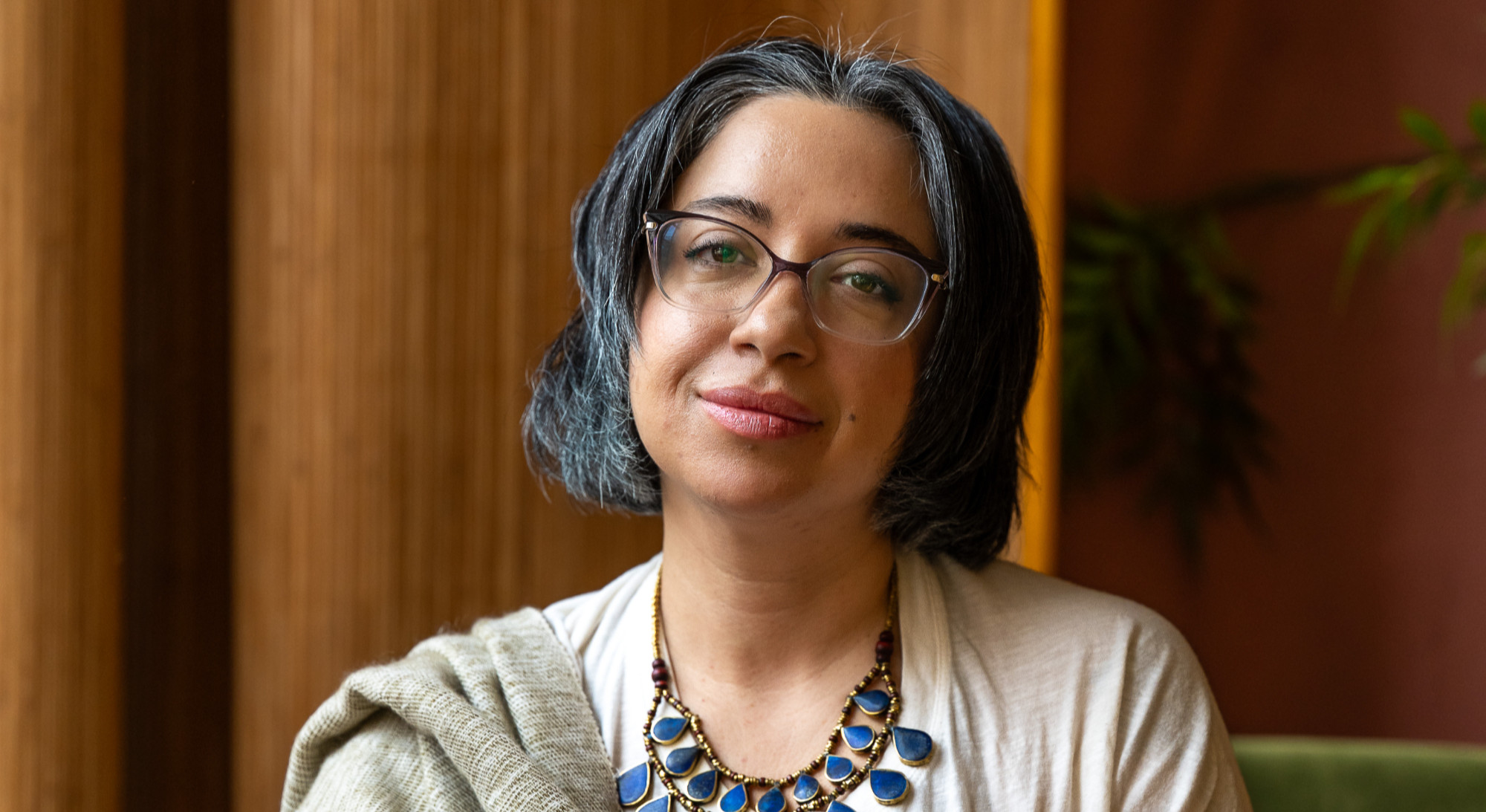
LCSW | Attached Focused EMDR Trained
Miriam supports adults working through trauma, attachment wounds, anxiety, identity concerns, and relationship patterns. Her work is relational and trauma-informed, helping clients understand how earlier experiences continue to shape their emotions, bodies, and relationships in the present.
References
American Psychological Association. (2025). Clinical practice guideline for the treatment of posttraumatic stress disorder (PTSD) in adults. https://www.apa.org/ptsd-guideline
Aşci, Ö., Demirgöz Bal, M., & Koçoğlu, F. (2024). The impact of childhood sexual abuse on adult female sexual function and sexual distress: A systematic review and meta-analysis. Turkish Journal of Psychiatry, 35(1), 63–74. https://doi.org/10.5080/u26991
Martsolf, D. S., & Draucker, C. B. (2005). Psychotherapy approaches for adult survivors of childhood sexual abuse: An integrative review of outcomes research. Issues in Mental Health Nursing, 26(8), 801–825. https://doi.org/10.1080/01612840500184012
Parry, S., & Simpson, J. (2016). How do adult survivors of childhood sexual abuse experience formally delivered talking therapy? A systematic review. Journal of Child Sexual Abuse, 25(7), 793–812. https://doi.org/10.1080/10538712.2016.1208704
Sousa-Gomes, V., Abreu, B., Moreira, D., Del Campo, A., Sá Moreira, D., & Fávero, M. (2024). Psychological intervention and treatment programs for adult victims of child sexual abuse: A systematic review. Psychological Trauma: Theory, Research, Practice, and Policy, 16(Suppl. 1), S274–S284. https://doi.org/10.1037/tra0001389
Talwar, S., Osorio, C., Sagar, R., Appleton, R., & Billings, J. (2024). What are the experiences of and interventions for adult survivors of childhood sexual abuse in South Asia? A systematic review and narrative synthesis. Trauma, Violence, & Abuse, 25(4), 2957–2971. https://doi.org/10.1177/15248380241231603
Vonderlin, R., Kleindienst, N., Alpers, G. W., Bohus, M., Lyssenko, L., & Schmahl, C. (2018). Dissociation in victims of childhood abuse or neglect: A meta-analytic review. Psychological Medicine, 48(15), 2467–2476. https://doi.org/10.1017/S0033291718000740
Whiffen, V. E., & MacIntosh, H. B. (2005). Mediators of the link between childhood sexual abuse and emotional distress: A critical review. Trauma, Violence, & Abuse, 6(1), 24–39. https://doi.org/10.1177/1524838004272543


Comments